



The Culinary Evolution of Miami Worldcenter
Today, the $6 billion mixed-use development—home to luxury condominium residences and a vibrant retail core—has materialized into a dining district that reflects Miami’s position as a global city. The neighborhood now supports a culinary landscape that brings together international influences and established names.
The transformation is visible along the 7th Street pedestrian promenade, where nearly 300,000 square feet of street-level retail and dining have created a walkable experience. International restaurateurs have chosen to open here, from Chicago’s highest-grossing steakhouse to Michelin-recognized chefs, setting a strong culinary foundation for downtown Miami.
The Anchor
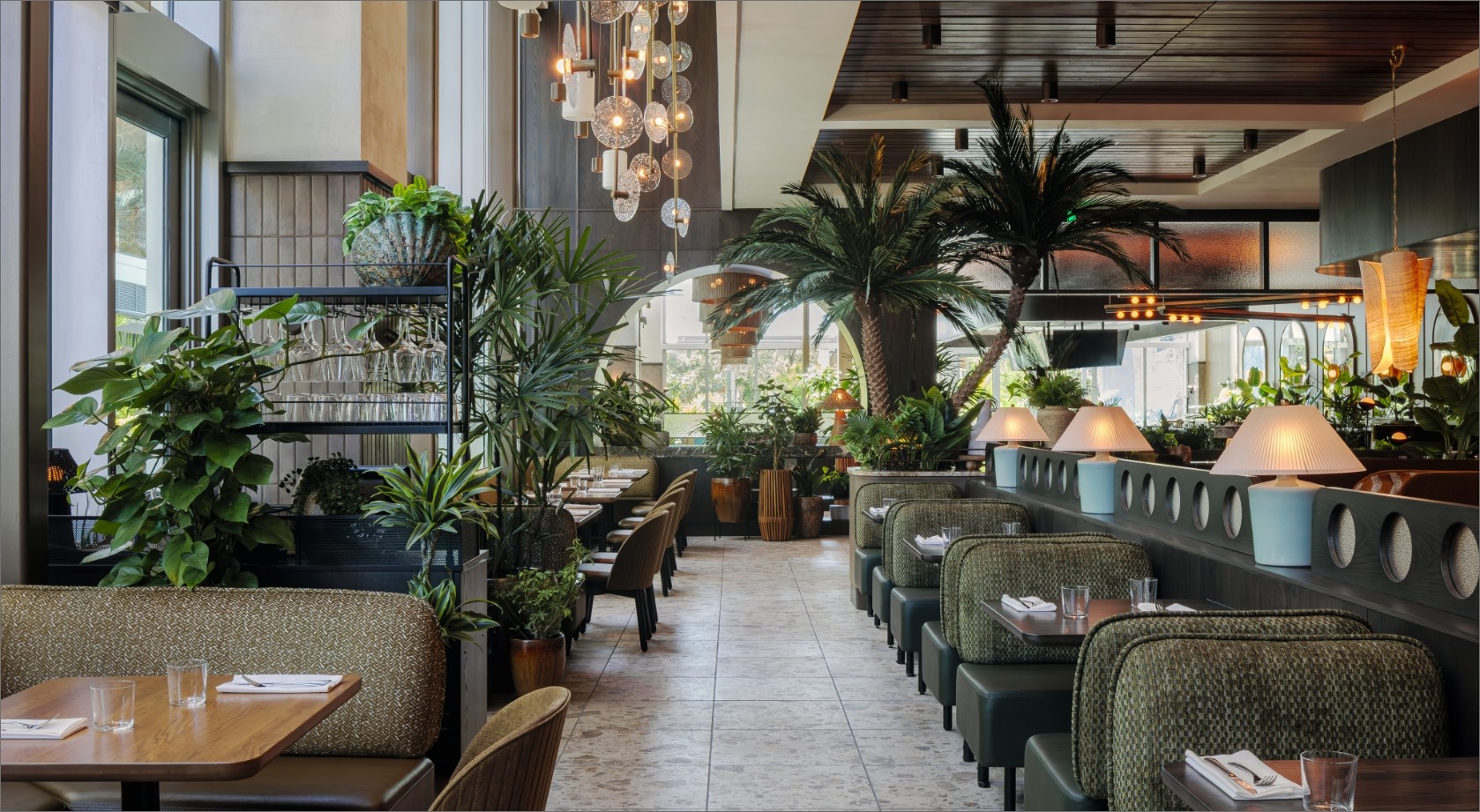
Brasserie Laurel opened in late 2022 as Miami Worldcenter’s first restaurant. Chef Michael Beltran—whose Coconut Grove restaurant Ariete holds a Michelin star—launched his modern French brasserie when much of the surrounding area was still under construction. Beltran’s approach to French classics served on Bernardaud porcelain demonstrated that downtown could support serious fine dining. The Michelin Guide noted that despite the richness of the cooking, both the food and environment “manage to feel decidedly of the times.”
Brasserie Laurel operates alongside two sister concepts: Chug’s Express, offering Cuban staples, and El Vecino, an upscale cigar bar.
Maximalist Ambition
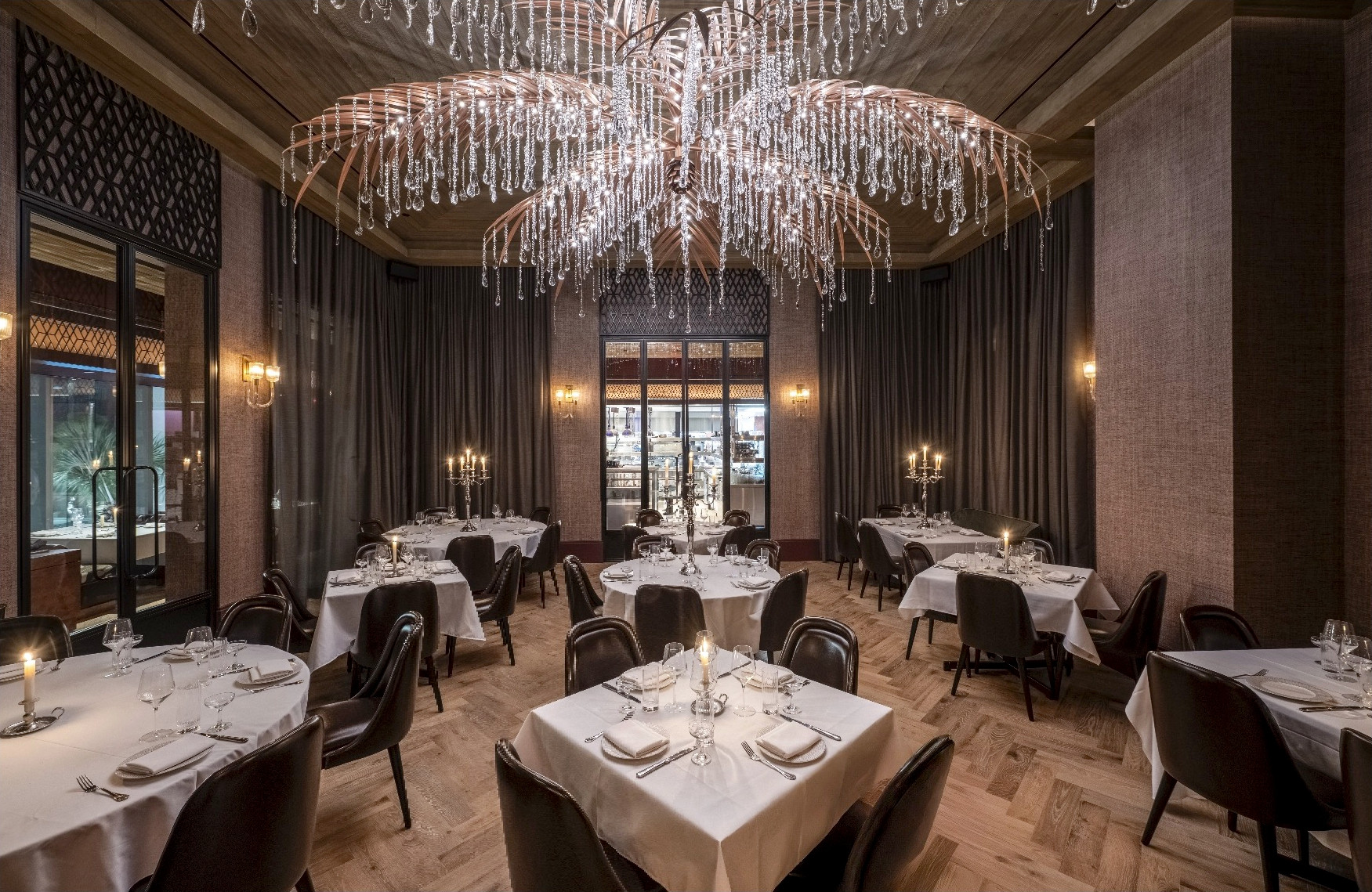
Maple & Ash arrived in March 2025. The Chicago steakhouse, overseen by two-Michelin-star Chef Danny Grant, built its largest location yet: 22,000 square feet across two floors. The space features an upside-down palm tree fashioned from 10,000 crystal beads, multiple dining rooms including Bar Bocuse for Champagne and caviar, and The Studio, a Friday-Saturday speakeasy. The wine program holds 2,500 bottles and a Wine Spectator “Best of Excellence Award.”
Grant’s menu balances steakhouse tradition with Miami’s seafood preferences. The Fire-Roasted Seafood Tower—hearth-roasted shellfish finished with garlic butter and chili oil—represents wood-fired cooking that has become a recurring element in Miami Worldcenter’s dining landscape. Following the restaurant's success, Maple & Ash opened Eight Bar in October 2025, a neighborhood bistro and raw bar on the ground floor.
Year-Round Dining
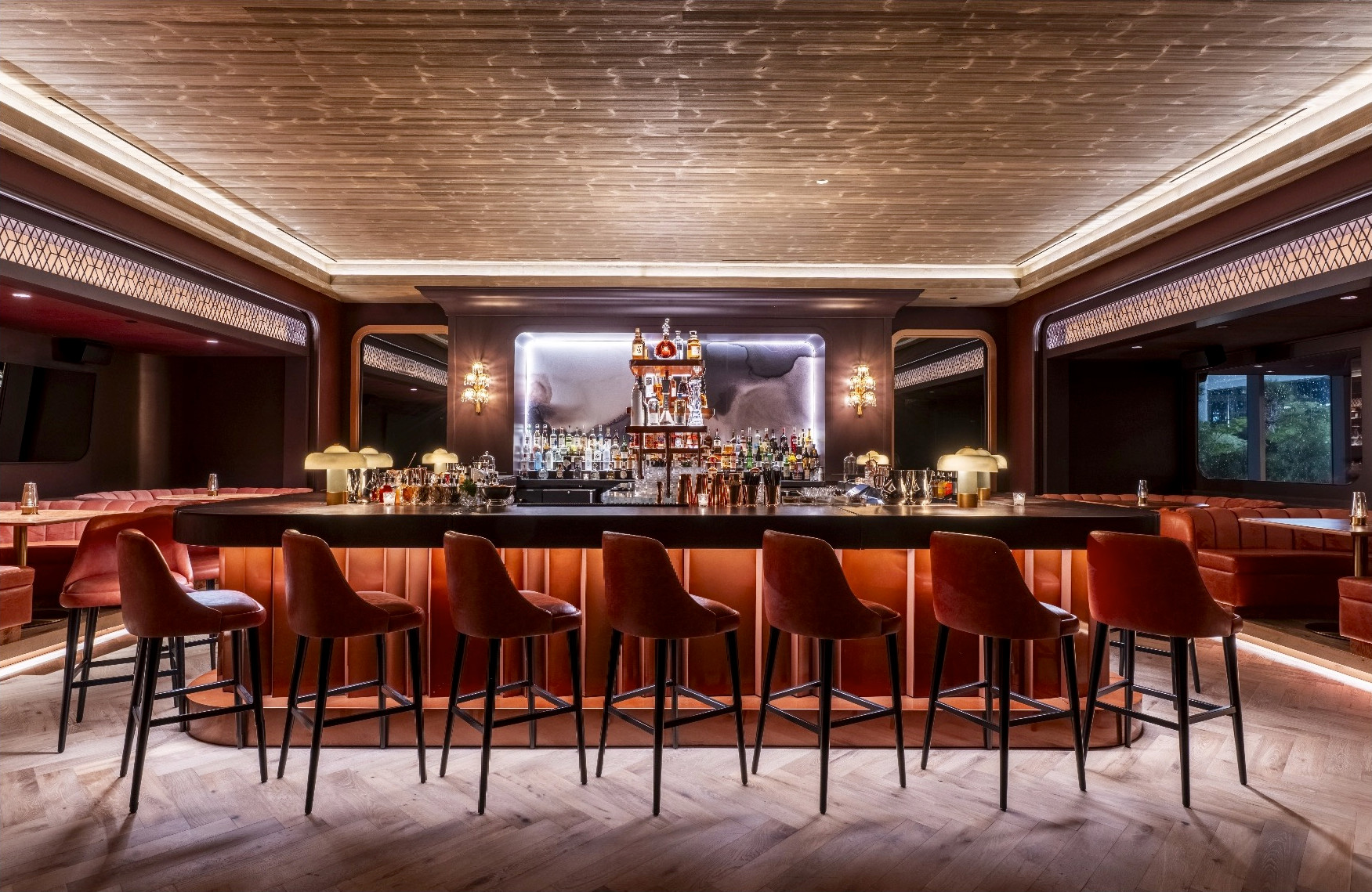
Earls Kitchen + Bar opened in April 2025, bringing a Canadian success story to Miami Worldcenter. The restaurant spans multiple levels with extensive indoor and outdoor space designed to capture what the brand describes as "Art Deco decadence meets relaxed beach vibes." The Modern American menu features USDA Prime grade steaks, fresh seafood, and globally inspired dishes, complemented by an innovative cocktail program.
What distinguishes Earls in Miami Worldcenter is its year-round outdoor dining—a natural advantage in Miami's climate. The restaurant's location, steps from the Kaseya Center, positions it as both a neighborhood gathering spot and a pre-event destination, with daily happy hourfrom 4-7pm and again from 10pm until close.
The Italian Table
Serafina arrived in May 2025, bringing New York Italian energy to an 8,176-square-foot space along the 7th Street promenade. The restaurant seats 283 guests across indoor and patio dining, centered around a Marana Forni pizza oven and a glass wine cellar stocked sixty percent with Italian bottles. The menu includes cacio e pepe spun tableside in a pecorino wheel, tartufo nero pizza, and penne alla vodka, alongside Miami-exclusive additions like wagyu meatballs and BlueFin tuna crudo.
Rooftop Ambitions
Villa One Tequila Gardens, co-founded by Nick Jonas and designer John Varvatos, will be located atop the Jewel Box building. The space features more than 160 tequilas and mezcals, a raw bar, and Baja-style Mexican cuisine designed by KOM Studio with Miami skyline views.
Juvia, the beloved Miami rooftop restaurant that closed its Lincoln Road location in 2023, is building its new home on the 12th floor of Miami Worldcenter's Block H, bringing French-Japanese-Peruvian fusion to downtown. Opening is anticipated in 2026.
Everyday Options
Beyond fine dining and rooftop experiences, Miami Worldcenter includes accessible dining that supports daily routines. Sweet Paris Crêperie & Café brings Parisian café culture to the morning hours, while Sixty Vines provides 60 wines on tap in a space designed for weekend brunch or evening wine dinners.
What's Next
Miami Worldcenter represents a vision of urban dining: high-density, internationally influenced, and designd to serve as a culinary hub. The development's proximity to the Kaseya Center, access to Brightline high-speed rail, and integration with Miami's public transit system position it as a place where people live and dine regularly.
From Michelin-recognized French cuisine to Chicago steakhouse traditions, from sustainable wine programs to rooftop dining experiences, Miami Worldcenter has assembled a diverse culinar portfolio. As the neighborhood continues to develop, it offers a walkable area where serious dining doesn't require weeks-advance reservations or a commitment to a single culinary style.