


Commercial Property Assessed Clean Energy financing – better known as C-PACE – is becoming a larger piece of the capital stack for major South Florida developments as construction costs and interest rates on loans remain elevated.
Once a niche tool used primarily for energy retrofits, C-PACE is emerging as a mainstream source of capital for new construction and major renovations across commercial properties in Miami-Dade, Broward and Palm Beach counties.
The financing structure allows developers to fund energy-efficient, water-saving and resiliency upgrades through long-term, fixed-rate capital that is repaid through a property tax assessment for up to 30 years. Because C-PACE financing is structured as a property tax assessment that runs with the land, it cannot be accelerated in the same way as a traditional construction loan if a borrower defaults.
Developers say the appeal is obvious because it offers cheaper financing, longer repayment schedules and the ability to preserve capital and senior debt capacity, since banks often want to hold the first lien and maintain a depository relationship, while private lenders tend to charge steeper interest rates.
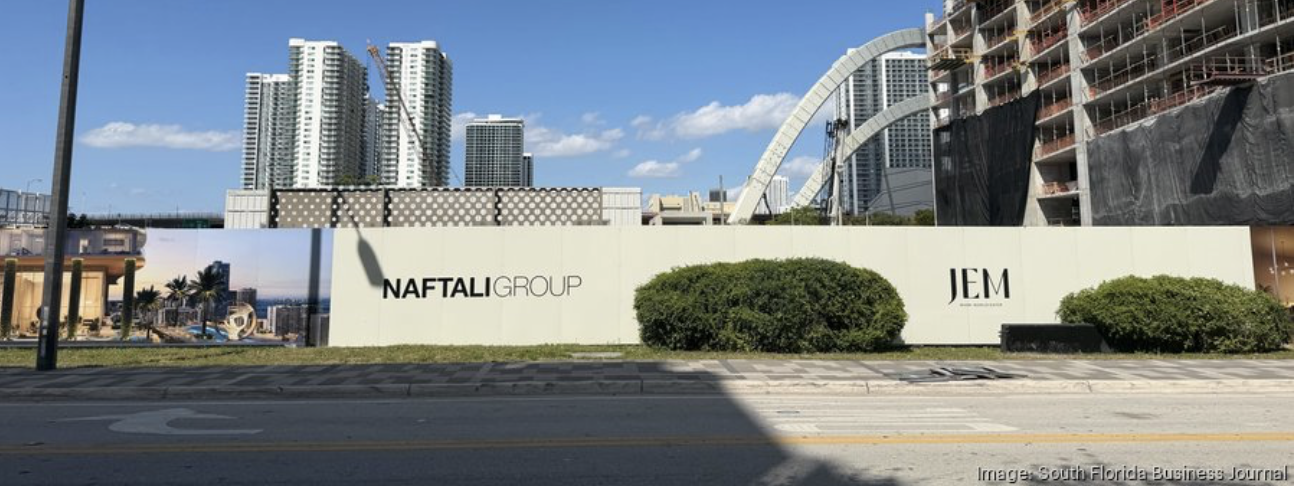
Miami-based Rilea Group and New York-based Naftali Group are among the developers that have recently turned to C-PACE financing through Nuveen Green Capital, each setting new benchmarks in the process.
In November 2025, Jem Residences, Naftali's Miami condominium and apartment project, secured $235 million in C-PACE financing from Nuveen alongside a $230 million construction loan from Bank Hapoalim, marking the largest C-PACE transaction in Florida to date.

Rilea followed in January, closing on $124.2 million in C-PACE financing from Nuveen, complemented by a $25 million senior loan from Miami-based Abanca USA, for the Mohawk Wynwood apartment project. The deal set a record for the largest C-PACE loan tied to a multifamily project in the state.
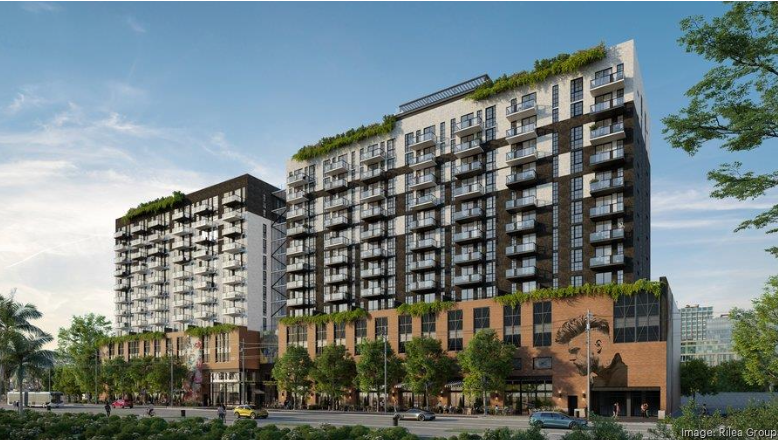
“From a developer’s perspective, it was a no-brainer," Rilea Group President Diego Ojeda said. "The terms were more attractive than anything we were seeing from debt funds or traditional lenders."

Under the structure, C-PACE typically makes up about 80% of a project’s debt, with the remaining 20% provided by a bank or private lender, though C-PACE generally represents no more than 40% to 45% of total project costs once equity is included.
Ojeda said the blended interest rate on the Mohawk Wynwood project is approximately 7.39%, fixed for 27 years.
“That’s incredibly competitive in today’s market,” he said. “You’re talking about long-term, fixed-rate financing at a time when most construction loans are floating, and refinancing risk is a major concern.”
C-PACE programs are authorized and regulated at the state level, and were initially designed for residential properties before being expanded in most states to cover commercial developments.

Recent Florida legislation, including Senate Bill 770 and related reforms passed in 2024, broadened eligible improvements and clarified statutory frameworks for C-PACE, helping streamline administration, expand the types of projects that qualify, and make the financing more accessible for commercial and residential property owners statewide.
"Each state has different nuances, but in Florida and South Florida, the C-PACE program allows for a wider variety of items to be eligible," said Anne Hill, senior VP of Bayview PACE, a division of Coral Gables-based Bayview Asset Management. "Normally, C-PACE covers things like energy efficiency and water efficiency. In South Florida, it can also cover resiliency. So anything you're doing to build the building more resilient against hurricanes, fires and other natural disasters can also be covered by C-PACE."

In projects with condos, like Naftali’s Jem Residences, the C-PACE loan stays with the project, not the buyer, and each unit is cleared of the loan at closing.
“The C-PACE loan is primarily for the multifamily component,” said David Hochfelder, Naftali's chief investment officer. “There's some loan allocated to the condo, but once we sell units and close with buyers, the C-PACE portion of that unit needs to be released, so you don’t pass the debt on to new owners.”

Hochfelder said the company also approached the C-PACE loan differently than most developers when it comes to the overall capital stack and how it fits into financing.
"Most people will work with C-PACE as a way of substituting out higher leverage mezzanine financing that's more expensive," he said. "In our case, it was really bringing down the cost of the senior debt, but it's usually used to substitute in place of more expensive subordinate debt."
Ryan Doyle, Nuveen Green's senior director of originations for the Southeast and Mid-Atlantic, said South Florida projects like the Jem Residences and Mohawk Wynwood are well suited for long-term, fixed-rate C-PACE financing because they are capital-intensive developments that could benefit from more flexible, cheaper financing. That’s why the region is one of the lender's most active C-PACE markets.

"We've done north of $850 million [in C-PACE loans in Florida] over the last five years, and I would say the majority of that's been in South Florida," he said.
Doyle added that one of the biggest early challenges of the program was educating developers, but today, South Florida developers are more knowledgeable and are approaching it strategically – not just as gap financing, but as a deliberate tool to optimize the capital stack. That shift has led to repeat usage and larger deal sizes.
Bayview’s Hill said the company uses C-PACE not only to support and educate developers, but also to help banks and debt funds explore how they can leverage the program.
“We spend a lot of time building those banking relationships,” she said. “Part of the reason South Florida has been so successful for us is that Bayview is headquartered in Coral Gables, so we’ve had the opportunity to educate the market about the product – not just developers and property owners, but other lenders, as well.”
Rilea’s Ojeda echoed that educating banks and lenders remains a key challenge for developers. C-PACE deals require coordination with senior lenders because the loan is repaid through property taxes, which can affect the priority of repayment and raise questions for banks unfamiliar with the structure.
“Banks always ask the same question: If things go wrong, who gets paid first?” he said. “That’s where track record, location and the strength of the project really matter.”